
How Price Comparison Between Local Stores Can Save More Than Money
Multi-store price and availability comparison improves meal planning, variety, and food security for time-pressed households while exposing hidden costs.

Why multi-store price comparison matters beyond the sticker price
Price comparison across local stores isn’t just about finding the lowest unit cost; it reshapes how busy urban adults and seniors plan meals and manage food budgets. When you compare availability and pricing side-by-side, you can spot total-order differences that aren’t obvious on a per-item basis — like bulk discounts, clearance items, or premium-pack substitutions that change the real cost of a meal. For time-pressed professionals and small households, that clarity reduces the mental load of deciding where to shop and which items to keep as staples, turning grocery decisions from a stressor into a predictable routine. Incorporating tags like price comparison and grocery strategy into your shopping workflow helps you make smarter trade-offs between cost, quality, and convenience.
Beyond money saved at checkout, multi-store visibility directly impacts variety and food security. If one store is out of a key ingredient, seeing alternative nearby sources prevents last-minute substitutions that ruin a planned meal or force an expensive convenience purchase. For seniors and solo households especially, reliable availability reduces the risk of missed meals or unsafe substitutions. In short, price and availability transparency is a foundational tool for meal planning and food security — not a nicety.
Tactics to combine items across stores and spot hidden fees
Combining items across stores requires a practical strategy: prioritize perishable items from the nearest store with the freshest stock, move staples or sale items to a cheaper nearby grocer, and consolidate delivery windows to minimize last-mile fees. Use a multi-store cart to see real total costs including delivery fees, service charges, and potential substitution upcharges before you confirm. Time-saver features like automatic staple reorder or recipe-to-cart conversion help you keep frequent buys in a single, optimized flow — reducing cognitive load and avoiding impulse add-ons. Tagging lists or recipes with price comparison and meal planning keywords makes it easier to re-evaluate choices over time.
Watch for hidden fees that negate apparent savings: delivery surcharges, service fees, minimum-order markups, and substitution or out-of-stock premiums can add more than the per-item savings you found. Schedule orders into off-peak windows when possible to secure lower delivery pricing or promotional credits. If using a platform that offers SLA-backed windows and live ETA updates, factor the value of predictability into your cost-benefit analysis — a slightly higher fee may be worth the reliability if it prevents wasted trips or missed ingredients.
How comparison data optimizes timing, variety, and food security
Using historical price and availability data lets you optimize when and where to order. If a certain store reliably discounts produce on weekday afternoons, schedule routine reorders just after that window; if another grocer frequently runs low on a favored yogurt, set substitution preferences or pick it from a different store ahead of time. Smart-reorder and recipe-to-cart tools that surface comparative trends transform grocery shopping into an automated habit rather than a weekly scramble. For time-pressed households, this reduces decision fatigue and increases the likelihood of varied, nutritious meals without extra chores — a direct improvement to food security and quality of life.
Finally, transparent comparison and guaranteed delivery windows combine to build trust. When platforms show the trade-offs between lowest price, fastest delivery, and substitution risk, customers can make informed choices aligned with their priorities. For seniors and solo households who prize predictability, that trust translates into higher retention and fewer costly last-minute fixes. Embracing price comparison, meal planning, and local grocery strategy isn’t merely a way to save money — it’s a tool to reclaim time, reduce anxiety, and ensure dependable access to food.
Why multi-store price comparison matters beyond the sticker price
Price comparison across local stores isn’t just about finding the lowest unit cost; it reshapes how busy urban adults and seniors plan meals and manage food budgets. When you compare availability and pricing side-by-side, you can spot total-order differences that aren’t obvious on a per-item basis — like bulk discounts, clearance items, or premium-pack substitutions that change the real cost of a meal. For time-pressed professionals and small households, that clarity reduces the mental load of deciding where to shop and which items to keep as staples, turning grocery decisions from a stressor into a predictable routine. Incorporating tags like price comparison and grocery strategy into your shopping workflow helps you make smarter trade-offs between cost, quality, and convenience.
Beyond money saved at checkout, multi-store visibility directly impacts variety and food security. If one store is out of a key ingredient, seeing alternative nearby sources prevents last-minute substitutions that ruin a planned meal or force an expensive convenience purchase. For seniors and solo households especially, reliable availability reduces the risk of missed meals or unsafe substitutions. In short, price and availability transparency is a foundational tool for meal planning and food security — not a nicety.
Tactics to combine items across stores and spot hidden fees
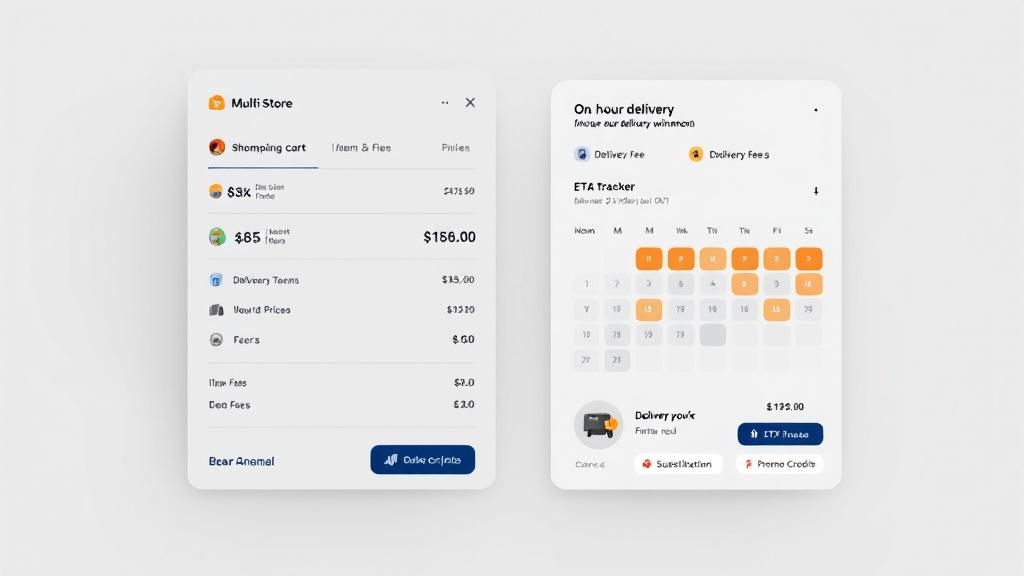
Combining items across stores requires a practical strategy: prioritize perishable items from the nearest store with the freshest stock, move staples or sale items to a cheaper nearby grocer, and consolidate delivery windows to minimize last-mile fees. Use a multi-store cart to see real total costs including delivery fees, service charges, and potential substitution upcharges before you confirm. Time-saver features like automatic staple reorder or recipe-to-cart conversion help you keep frequent buys in a single, optimized flow — reducing cognitive load and avoiding impulse add-ons. Tagging lists or recipes with price comparison and meal planning keywords makes it easier to re-evaluate choices over time.
Watch for hidden fees that negate apparent savings: delivery surcharges, service fees, minimum-order markups, and substitution or out-of-stock premiums can add more than the per-item savings you found. Schedule orders into off-peak windows when possible to secure lower delivery pricing or promotional credits. If using a platform that offers SLA-backed windows and live ETA updates, factor the value of predictability into your cost-benefit analysis — a slightly higher fee may be worth the reliability if it prevents wasted trips or missed ingredients.
How comparison data optimizes timing, variety, and food security
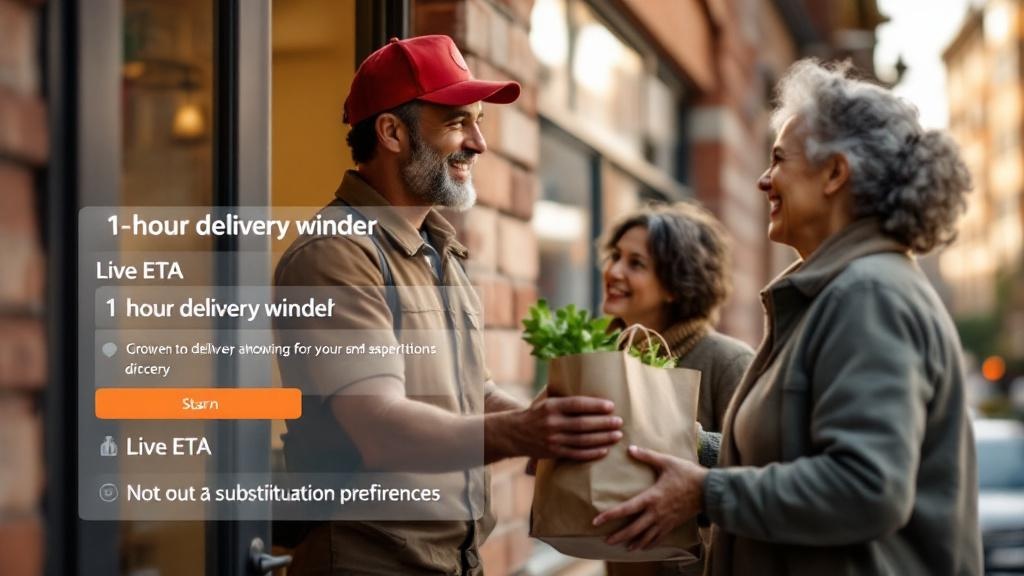
Using historical price and availability data lets you optimize when and where to order. If a certain store reliably discounts produce on weekday afternoons, schedule routine reorders just after that window; if another grocer frequently runs low on a favored yogurt, set substitution preferences or pick it from a different store ahead of time. Smart-reorder and recipe-to-cart tools that surface comparative trends transform grocery shopping into an automated habit rather than a weekly scramble. For time-pressed households, this reduces decision fatigue and increases the likelihood of varied, nutritious meals without extra chores — a direct improvement to food security and quality of life.
Finally, transparent comparison and guaranteed delivery windows combine to build trust. When platforms show the trade-offs between lowest price, fastest delivery, and substitution risk, customers can make informed choices aligned with their priorities. For seniors and solo households who prize predictability, that trust translates into higher retention and fewer costly last-minute fixes. Embracing price comparison, meal planning, and local grocery strategy isn’t merely a way to save money — it’s a tool to reclaim time, reduce anxiety, and ensure dependable access to food.